
Voices of Mahomet
A Brand Strategy for the
Mahomet Area Chamber of Commerce
A Brand Strategy for the
Mahomet Area Chamber of Commerce
This project focused on developing a comprehensive brand strategy and visual identity for the Mahomet Area Chamber of Commerce (MACC). The challenge was to move beyond simply updating a logo; it required synthesizing the diverse, sometimes conflicting, interests of local businesses, residents, and civic leaders into a single, cohesive strategic narrative.
I led the research and synthesis phase, using co-creation workshops and deep listening techniques to distill the core community values. The final deliverable was a unified strategic framework, visual identity system, and a phased implementation roadmap designed to boost external perception and internal stakeholder engagement for long-term community growth.
Mahomet, Illinois is one of the fastest-growing communities in the region, driven by its excellent schools and small-town charm. However, the Mahomet Area Chamber of Commerce (MACC) struggled with a brand that didn't reflect this vibrancy. The Chamber faced a core strategic problem: its identity was fragmented, leading to low visibility and difficulty in attracting new businesses. Existing communications were inconsistent, failing to capture the unique value proposition of the Mahomet community.
Our initial research and a Brand Diagnostics Workshop revealed three main gaps:
The brand felt emotionally unclear and fragmented, leading to confusing messaging across platforms. Communication was focused on current events rather than proactive, strategic storytelling about the community's long-term identity and strengths.
MACC's logo and identity were often confused with those of the Village of Mahomet, undermining its unique role as a business advocate. MACC's purpose was unclear to potential members, making it difficult to justify membership fees and investment in community development.
While seen as a supportive organization, the brand lacked the warmth, pride, and emotional resonance that truly reflected the community's spirit. Businesses, residents, and the board lacked a shared vocabulary or vision for the future, hindering collaborative growth initiatives.
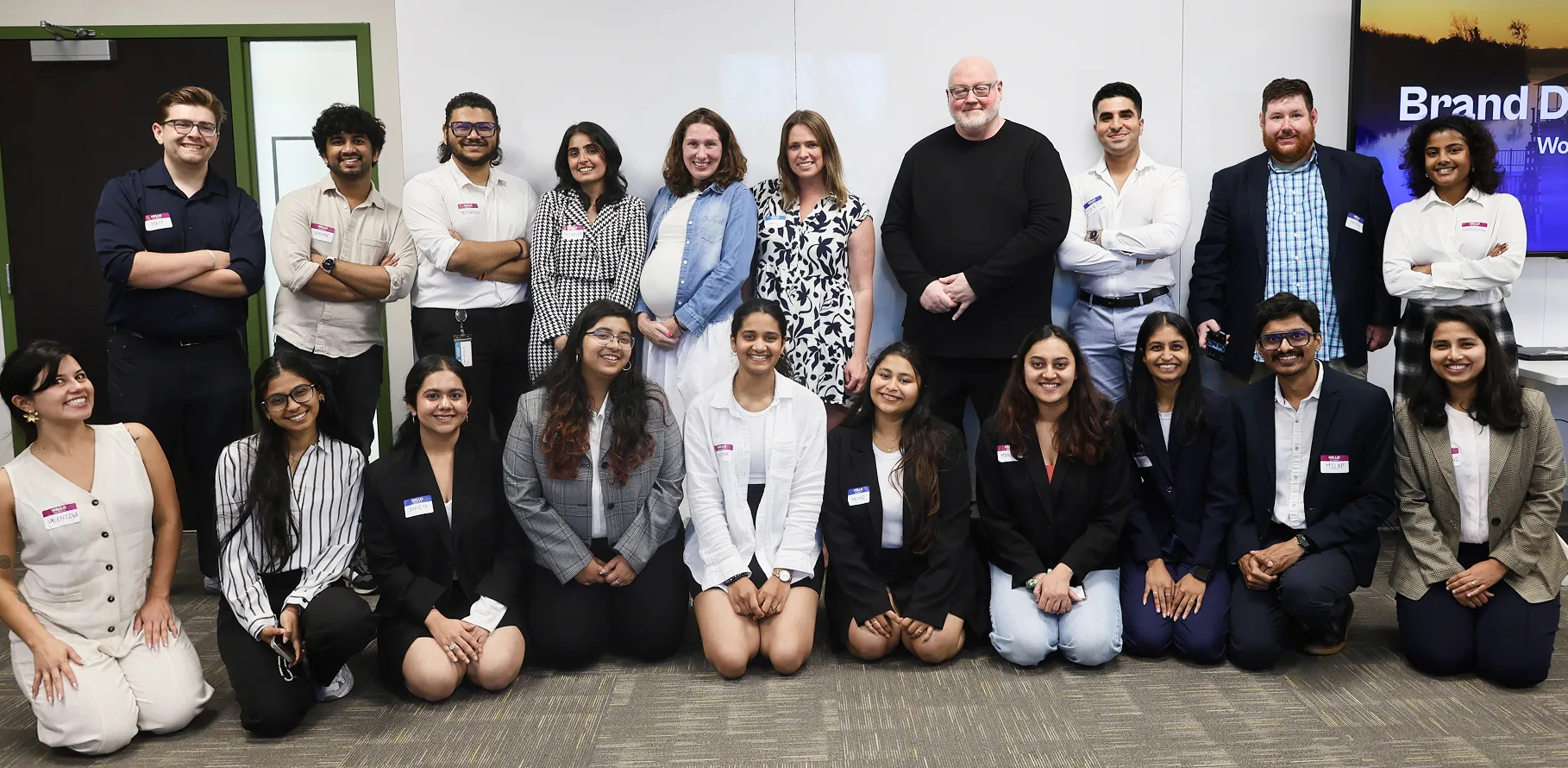
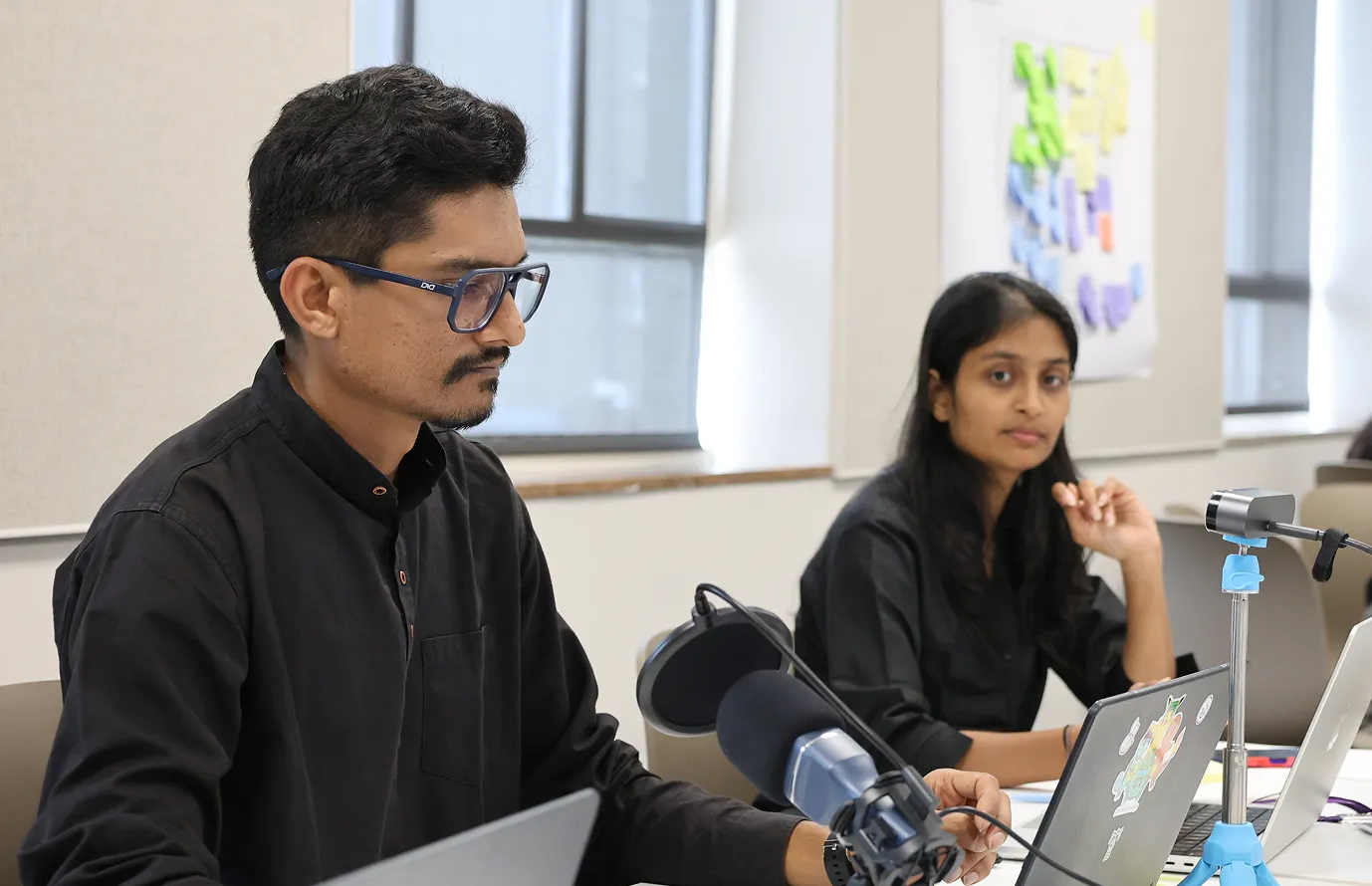
Our approach was rooted in co-creation, ensuring the final brand was not just designed for MACC, but with them. The process was broken into three key phases.
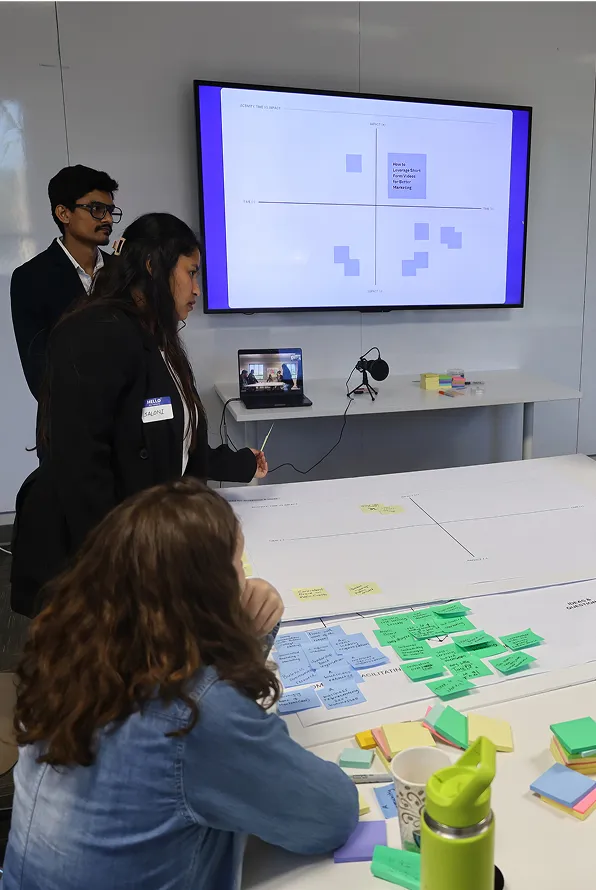
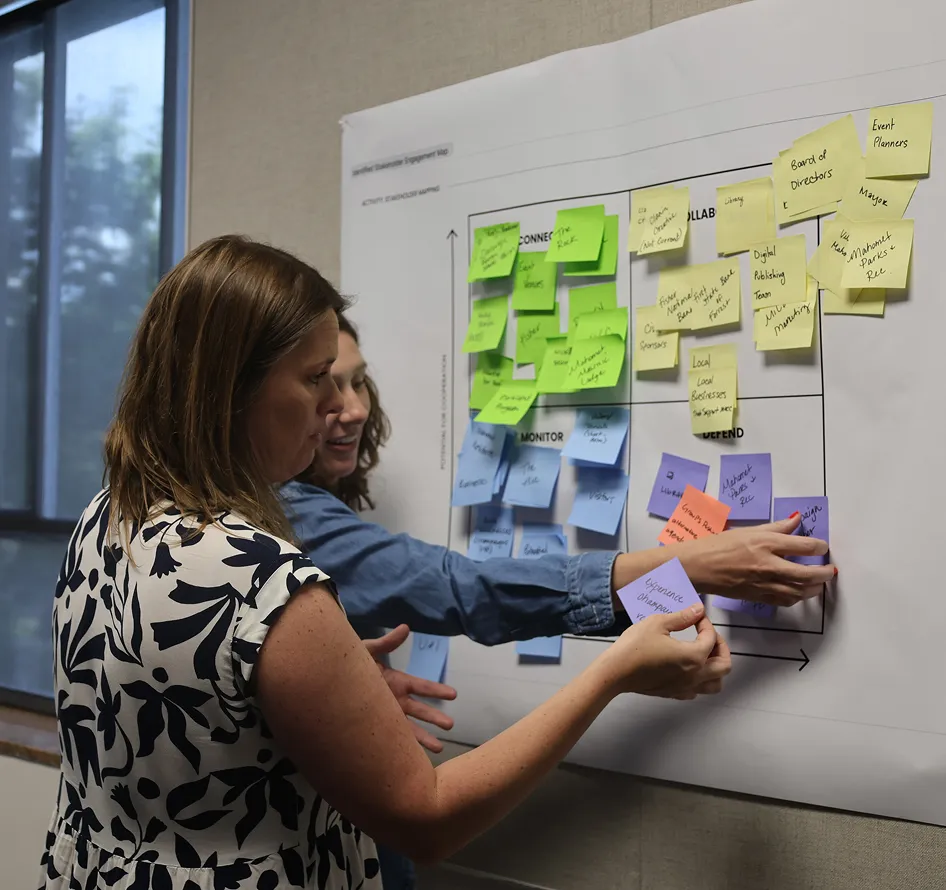
Before solving the problem, we had to define it. This was done through a comprehensive secondary research that uncovered core issues and opportunities. We confirmed these through a Brand Diagnostics Workshop with key stakeholders (board members, businesses, town officials). Through structured activities, we mapped the MACC’s current state of core community perceptions, aspirations, and pain points.
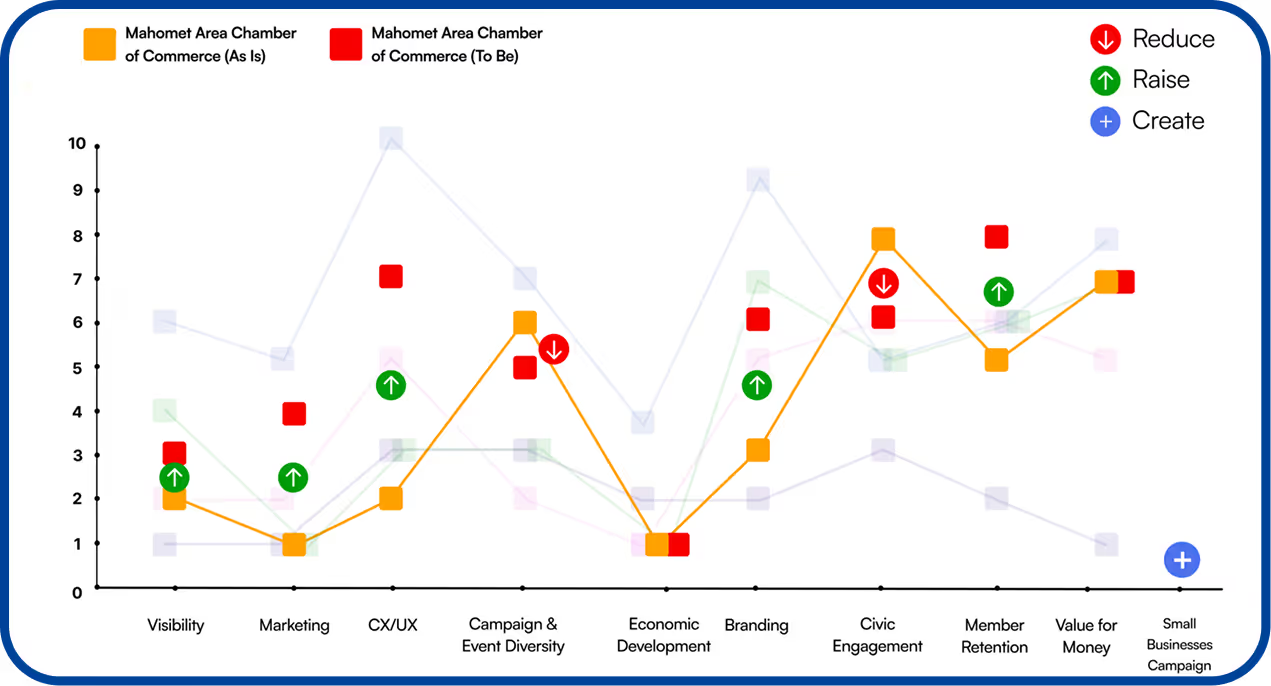
Blue Ocean Strategy: We mapped MACC against regional competitors across key performance attributes. This revealed that while MACC excelled in campaign diversity, it lagged in branding, marketing, and CX/UX, highlighting a clear opportunity to differentiate.
With a clear understanding of the problem, we facilitated a Branding Co-Creation Workshop to build the new brand's foundation from the ground up. This collaboration resulted in a brand that reflects community’s true spirit, including a pivotal shift in core values.
These hands-on workshops using strategic frameworks like Semantic Differential, we translated raw insights into unified positioning statements that the MACC board could own.
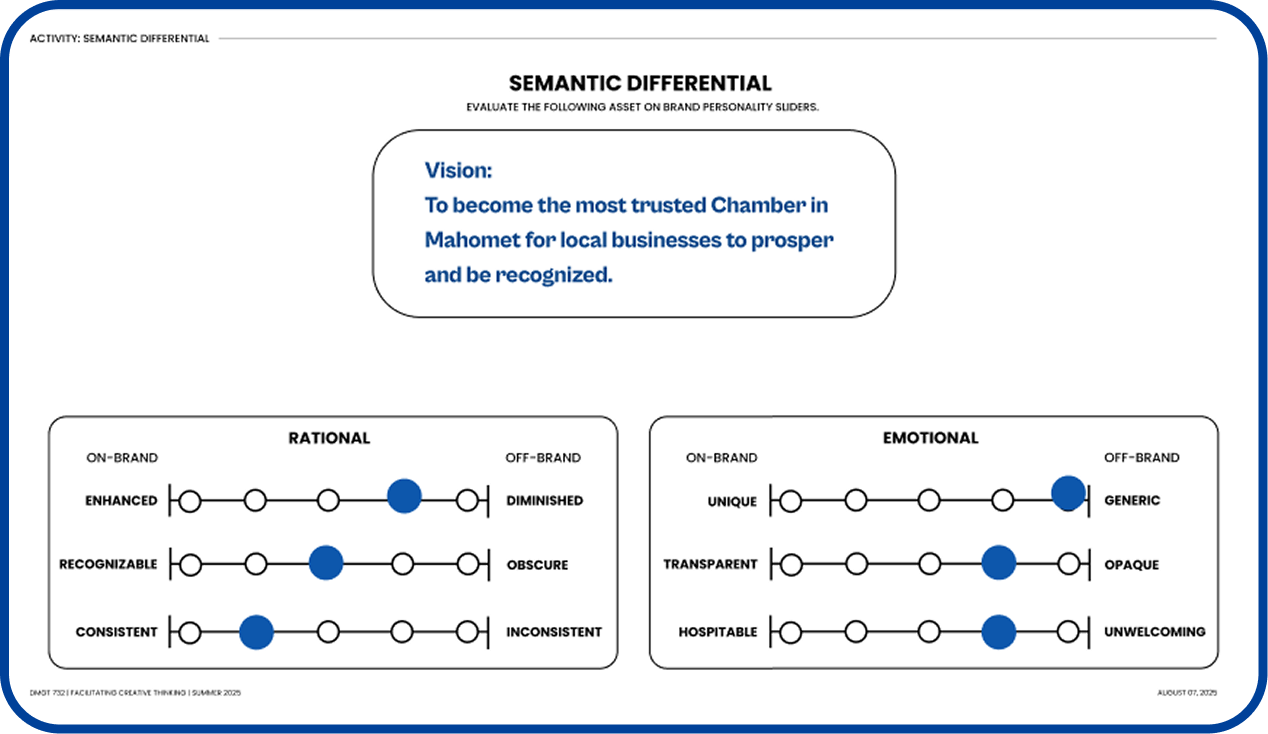
Refining the Philosophy: We collaboratively refined the mission, vision, and tagline. The client's feedback was crucial, such as revising the vision from "lifting our business community" to "supporting our business community" to better reflect inclusivity and clarity.
My team synthesized the insights from both workshops into a clear creative brief. This guided the iterative design process for the new visual identity. We transformed MACC's foundational statements to be more impactful and aligned with the community's aspirations.
We created a flexible brand architecture defining the core promise, personality, and tone of voice. This framework served as the strategic blueprint for all subsequent creative outputs (logo, messaging).
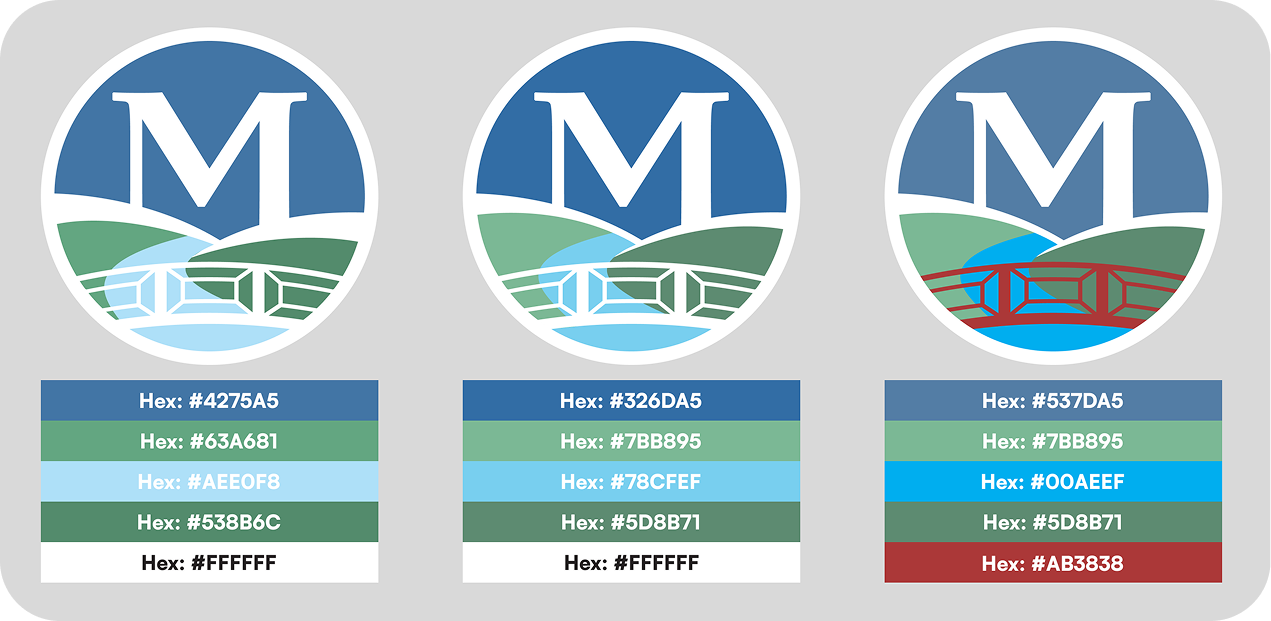
Logo & Color Palette: We explored multiple logo concepts, gathering client feedback at each stage to refine the design. The final direction was chosen for its ability to honor Mahomet's heritage (the river and bridge) while presenting a modern, professional, and distinct identity that resolved the confusion with the Village's branding. The new color palette is more vibrant and accessible, adhering digital standards while feeling energetic and welcoming.
The final output was a comprehensive brand system designed to be cohesive, authentic, and easy to implement. As the culminating deliverable, I authored the Brand Guidelines document that translated the abstract values into concrete tools for communication and execution.. This was more than a style guide; it was a strategic toolkit to empower the MACC team.
The document codified every aspect of the new brand to ensure long-term consistency:
Brand Philosophy: Outlined the mission, vision, values, and goals to anchor all communications.
Visual Narrative: Provided strict rules for logo usage, clear space, color palettes (for brand, logo, and web), and a complete typography system.
Verbal Narrative: Defined the dual-tone voice, writing style, and provided concrete examples for professional and social media contexts.
Click on the image to view the Brand Guidelines for MACC.
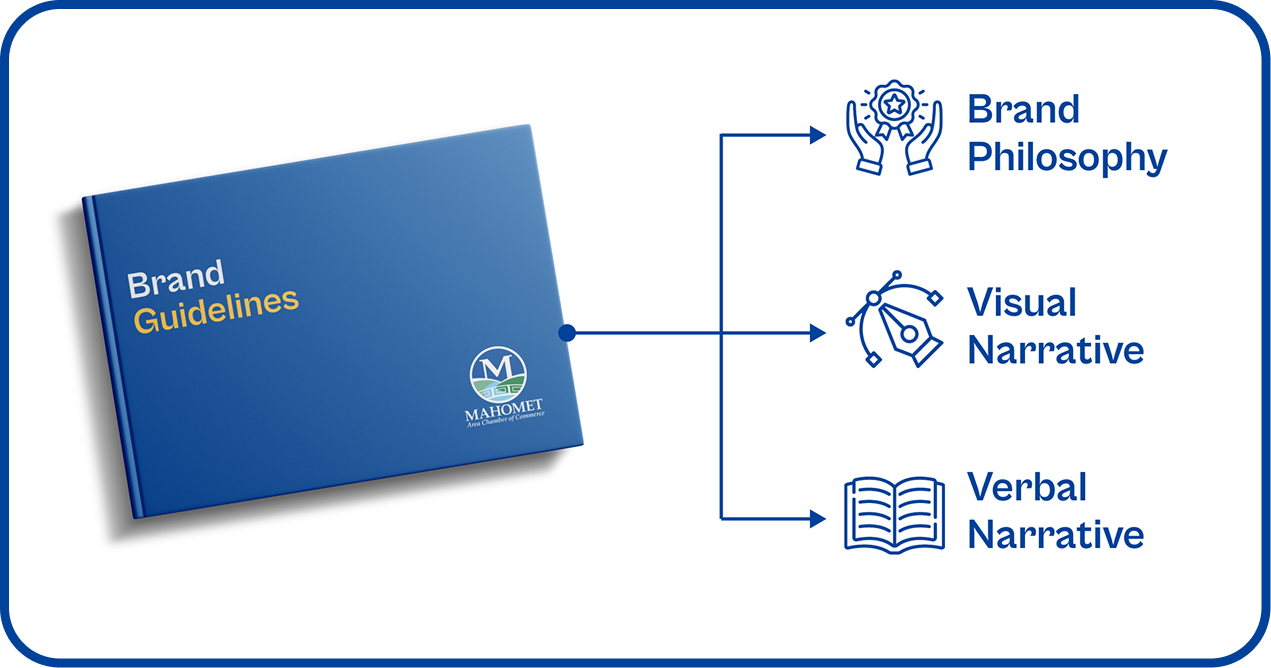
These guidelines defined the core messaging framework and provided an implementation roadmap for easier adoption, A new visual system (logo, color palette, typography) based directly on the synthesized community values, providing a professional and recognizable look.


To ensure the brand refresh was not just a creative exercise, we established a clear OGSM (Objectives, Goals, Strategies, Measures) framework. This provided an actionable roadmap and defined what success would look like. This confirmed that the brand transformation would deliver tangible, trackable results. It elevated the project from a design exercise to a strategic investment in the organization's future.
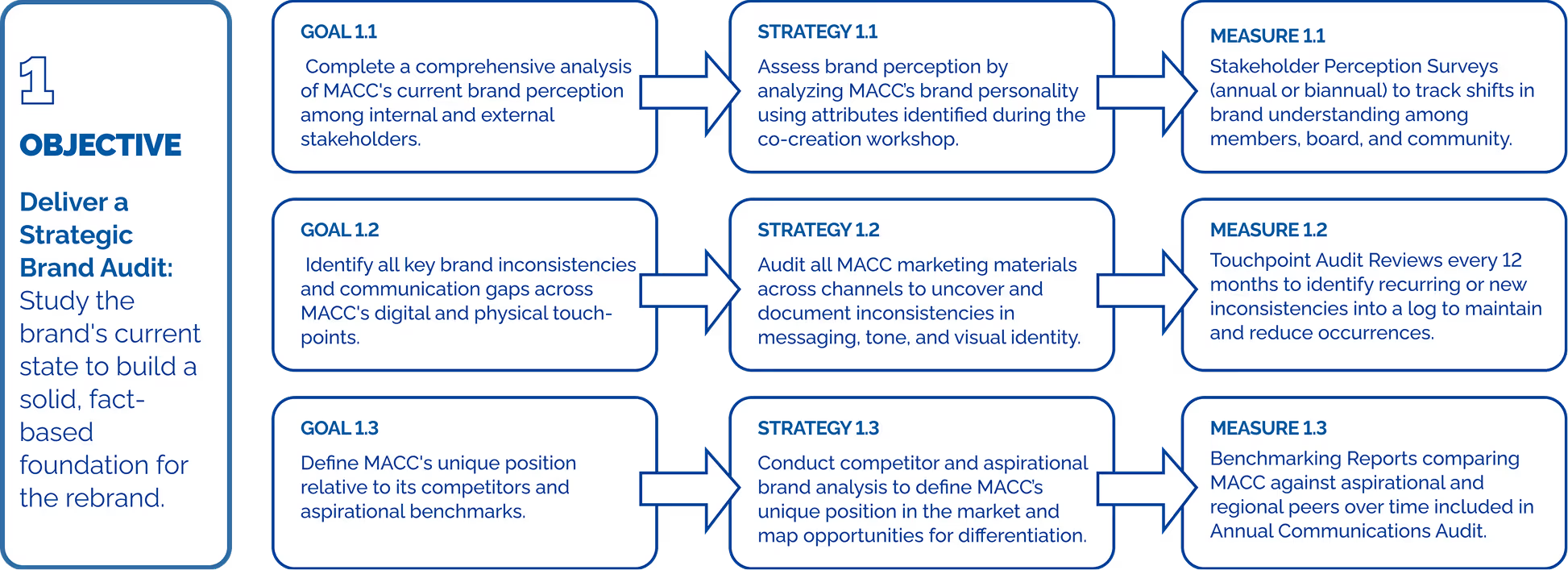
The strategic repositioning provided the Chamber with the tools necessary to stabilize its brand, drive membership growth, and secure its long-term relevance within the Mahomet business ecosystem.
Actionable Clarity
The project provided MACC with a strategic foundation and prioritized next steps for implementation across its branding, website, and campaigns. The Branding Guidelines document delivered a single source of truth for all communications, eliminating internal messaging inconsistencies and saving time for staff.
Increased Buy-In
The co-creation process ensured high levels of board and member endorsement, turning stakeholders into brand advocates. Our project laid the foundation for building consensus and excitement for the shared vision. By involving stakeholders at every step, the final brand is one that the entire community feels ownership of.
Future-Proof Framework
The Brand Guidelines serve as a living document that gives the MACC team the tools and confidence to apply the new brand consistently, reducing reliance on external designers and ensuring long-term cohesion. The final strategic framework is flexible, guiding future initiatives without requiring constant consultation or redesign.
This project was a masterclass in translating ambiguity into strategy. It reinforced my belief that the most effective branding comes from deep listening and genuine collaboration. Leading this brand strategy project required me to act as a neutral facilitator, managing emotional resistance to change while simultaneously driving a strategic outcome. The primary challenge was achieving consensus among diverse stakeholder groups - from local small business owners to government officials - each with different priorities. I overcame this through structured, impartial workshops focused purely on synthesizing shared community values.
The key takeaway was the power of structured consensus: strategic design is fundamentally change management, where co-creation is the most effective tool for gaining long-term organizational buy-in. Authoring the Brand Guidelines taught me how to distill a complex strategic process into a simple, actionable tool that empowers a client for years to come. Delivering a clear, actionable brand kit ensured that the strategy was executable by a small, resource-constrained team.